Powered By Blogger
Showing posts with label USA. Show all posts

Thursday, September 8, 2011

THE SHOW’S NOT OVER UNTIL THE GOP LADY SINGS!


“Pre-election America-2012” cycle
The U.S. presidential election campaign is under way. There’s much less intrigue in it than during the last one in 2008. And it’s not even because the Russian campaign also started. It’s all about the fact that one bidder for the Presidential post is already known — it is the incumbent President Barack Obama. So the most part of action is on at the side his rivals — the Republican Party also known as the Great Old Party (GOP).

Saturday, March 26, 2011

«END OF YALTA» MAY AS WELL BE THE END OF THE WORLD.


On the 9th of March this year “Rossiyskaya Gazeta” published an article by Nicolay Zlobin that was entitled “End of Yalta system”. Professor Zlobin proclaimed an end of the Cold War and the stand of two global systems —according to him, “Yalta system” was the quintessence of it.


On the 9th of March this year “Rossiyskaya Gazeta” published an article named “End of Yalta system” by Nicolay Zlobin[1]. Professor Zlobin proclaimed an end of the Cold War and the stand of two global systems —according to him, “Yalta system” was the quintessence of it.
In his article N. Zlobin bound the change of the world order to the series of Arabian revolutions — according to him, the latter are “giving up the regional remains of Yalta system for lost. Once it used to be the foundation of the post-war world politics. The system started to recede along with collapse of the Soviet Union, but creation of Kosovo and recognition of the South Ossetia has shattered its very principles. Due to the Northern African events, it belongs to history alone”.
Completely sharing author’s opinion regarding the ideological stand of two systems and the bipolar world that have actually lost its time, I’d still like to voice up certain thoughts, which this respectable political scientist somehow failed to notice.

Friday, March 11, 2011

Pragmatic European look upon Libya


Libya is an oriental country from a fairy-tale. In a decade or so one of the poorest African countries and a former pariah of global community has turned into a wealthy state that the top Western powers have been flirting with. While immersing into the revolutionary chaos Libya threatens the European Union, which is afraid of the increased inflow of illegal immigrants.

Friday, March 4, 2011

Not the right time for the G2. Part 2


Chinese economic miracle became possible and will remain such in future if PRC decides to be a part of global economic and political system, if it will wish and be able to participate in the global discourse on the model of its further development and exchange of ideas. Therefore, fantasies about unipolar and even bipolar (the USA—China) world would hardly come true in the foreseeable future. China is, without a shadow of doubt, an important element of global economics, politics and international security. But the roles of the so-called emerging powers like Brazil, Russia, India, Indonesia and Turkey will also be increasing. That’s why we have to mark out the following statement of the U.S. State Secretary:
“History teaches that the rise of new powers often ushers in periods of conflict and uncertainty. Indeed, on both sides of the Pacific, we do see some trepidation about the rise of China and about the future of the U.S.-China relationship. Some in the region and some here at home see China’s growth as a threat that will lead either to Cold War-style conflict or American decline. And some in China worry that the United States is bent on containing China’s rise and constraining China’s growth, a view that is stoking a new streak of assertive Chinese nationalism. We reject those views.”

Tuesday, March 1, 2011

Not the right time for the G2. Part I

On the 18th of February, right before Hu Jintao’s visit to the USA, Hillary Clinton delivered a speech in the State Department where she mentioned the possible future format of Sino-American relationship in the 21st century. Recent rapid growth of the PRC economics made everyone talking about the new Chinese global role, which may reconfigure the G8 having reduced it to the G2 — alliance of America and China.
Public address of the U.S. State Secretary was timed to the commemoration events for Richard C. Holbrooke, who passed away in the end of last year. This well-known American diplomat used to be the State Secretary Deputy for the Asian-Pacific region in Jimmy Carter’s government and was mostly responsible for the coordination of foreign-policy efforts that normalized the diplomatic relations between the PRC and the USA in 1978-79 after death of Mao Zedong and Dang Xiaoping’s coming to power. Since then world has changed and so have both of these countries. As madam State Secretary emphasized, it was the rule of Democratic President (Richard Nixon) and efforts of then chief of American diplomacy Henry Kissinger that helped to achieve the fundamental improvement of bilateral relationship:

Sunday, November 21, 2010

New security architecture, born at the safe haven of Lisbon.


In antique Phoenician language “Lisbon” meant the “safe haven”.  This beautiful city has already been a cradle of one historical agreement — the Lisbon Treaty, which revived the European Union. Now we may say that Lisbon also became a place of birth for the new European security configuration. New Strategic Concept of the Northern Atlantic Alliance — accompanied by the new configuration of partnership with Russia — has without doubt become a main achievement of the NATO summit, which took place this weekend. From now on, NATO and Russia are the strategic partners.

Saturday, November 20, 2010

Homework for the Summit in Lisbon


Meeting in Baku

Today’s NATO summit in Lisbon is so important for its participants that each side — having expected certain results — didn’t hesitate to do its part of the homework in order to demonstrate their true intentions to their partners. American President publicly given his Russian colleague to understand that he remembers all of their preliminary oral arrangements. He gathered some sort of an Advisory Council and — in the presence of his aides, including Henry Kissinger (creator of the „shuttle diplomacy” term) — held a speech regarding the START treaty. Railroading the latter through the Congress after his failure at the mid-term elections wouldn’t be a piece of cake this time.

Thursday, November 18, 2010

Georgia puts up…Russian WTO membership for an auction


Mr. Lawrence Summers

Negotiations over the Russian entry into World Trade Organization have been dragging on  since 1995, which seems to be record term for that. Not a single country in the world had struggled for the membership in this international club longer than Russia. Discussion among Russian economists on whether Russia needs WTO or not is still on and will seemingly last forever. It seems, though that those who oppose it are actually right. Mutual cancellation of customs tariffs will lead to the increase of margin on traditional Russian export goods, i.e. mostly raw natural resources (oil, gas, metals and fertilizers) but due to the traditional Russian export-trade model, these profits would still never leave various „tax havens” and would never get back into country

Thursday, November 11, 2010

Japanese defense abilities. Part 2


Evolution of Japanese army
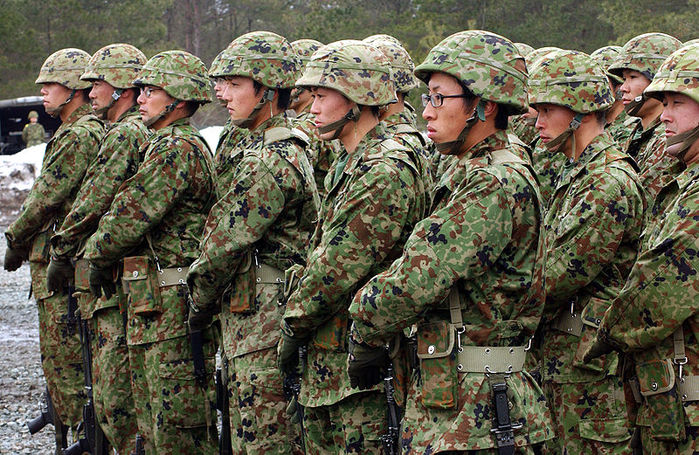
With the end of the Cold War and decreased tension at the East-West line, Japan started to revaluate its defense concept. Previous system of defense against ground invasion ceded to BMD system and special military and navy operations. Due to that, amount of armored vehicles in Japanese army was reduced from 900 to 600. At the same time, in 2011 new Type-10 tank is to go into service. Japanese also plan to reinforce the Central Readiness Force (CFR) and set up the submarine patrols of Japanese and Eastern-Chinese seas.

Monday, November 8, 2010

Japanese defense abilities. Part 1


Recently emerged tension in the Russo-Japanese relationship brought us to the idea to analyze the defense abilities of Japan and other Asian-Pacific countries. But let’s start with Japan.
Pacifism constitution
Article 9 of the Japanese constitution states: “Japanese people forever denounce war as a sovereign right of the nation”. Thus, having been adopted in 1947, Constitution reflected an act of national penitence for the aggressive expansion policy that eventually brought Japanese people to unleashing of the Japanese-Chinese war of 1937-1945 and its participation in the Second World War alongside with Nazi Germany. During almost ten years Japan hasn’t even got its own army, although the Cold War logic made Japanese create the Japan Self-Defense Forces (JSDF). Today they make one of the most advanced and well-equipped armies of the world. According to the Japanese Constitution, this army can only be used for the sake of defense of its own territory and only up to degree, necessary to repel the direct attack. Due to the same reason, Japanese military is not allowed to have intercontinental ballistic missiles, aircraft carriers and strategic bombers.

Wednesday, November 3, 2010

Temptation of Europe. Part II


Russian concept of the European security

During the last ten years Russia has dramatically changed its public image and now it doesn’t look like a “poor cousin” that humbly awaits his turn in the European reception room anymore.
The “upgrading” model of the state progress, proclaimed by Dmitry Medvedev, inevitably leads to the increasing role of Russia in a new global society.

Monday, November 1, 2010

Temptation of Europe


Deauville summit and Dmitry Medvedev’s promise to take part in the NATO summit in Lisbon makes us take a seriously different view of his initiative to create a new European security system

Security system that emerged after the Second World War was based on confrontation of two competing military-political alliances: NATO and the Warsaw Treaty — these agreements were personifying the bipolar system of the Cold War period. After the collapse of the USSR and, consequently, the Warsaw Treaty, there was a short period of the mono-polar U.S. dominion.

Thursday, October 28, 2010

The first currency war with an unpredictable outcome. Dollar versus yuan.


In September Congressmen from House of Representatives adopted the bill on measures of counteraction to the low yuan exhange rate. In particular, this bill allows American companies to file the claims for imposition of import duties for the Chinese goods in order to compenste the effect of low exchange yuan-dollare rate.
In fact the wealthiest country in the world owes great amounts of money to China, which owns 20% of all American state securities.
Chinese are holding the detonator, capable of exploding an entire American financial system in their hands. U.S. Department of Finance bonds are just the loan securities, which American government is obliged to pay up with an interest — that’s actually what governments of other countries and various financial institutions are buying them for. Why then — despite the U.S.-born financial crisis — investors from all over the world are still buying up these securities?

Monday, October 18, 2010

Can START turn into FINISH?


Keith Payne, Ph.D. from the Heritage Foundation believes that signing of new START treaty with Russia will put an end to the U.S. security and the entire Western civilization. We’d try to analyze this opinion. But even without any further analysis we may confidently state that failure to sign the START treaty would obviously turn the reset of Russo-American relationship into FINISH — and we may have every reason to throw out the red button, which Hillary Clinton was hilariously swinging in front of her Russian colleague, Sergey Lavrov. One needn’t be a Philosophy Doctor to make such a conclusion.